

A Pivotal Shift in Salesforce Data 360 Pricing
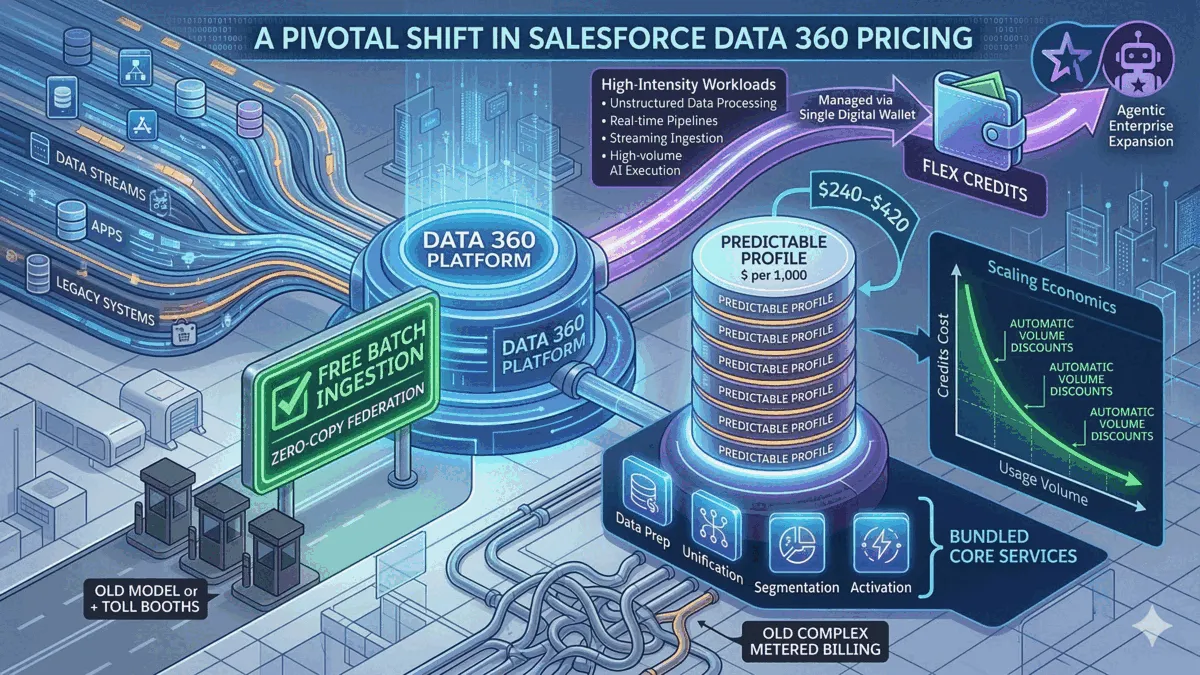
An architect-focused analysis of Salesforce Data 360 pricing changes, including zero-cost batch ingestion, predictable profile pricing, and flex credit scaling economics.
As a Data 360 solution architect, I’m constantly analyzing how this platform adapts to the scaling realities of the clients. The complexity and unpredictability of consumption-based models can be a significant barrier to enterprise adoption, especially when trying to prove ROI on large-scale data unification initiatives.
The latest update on the Data 360 pricing model brings a pivotal shift in this space. It moves beyond complex metered billing and introduces two essential structural changes: Zero Cost Batch Ingestion and Predictable Profile Pricing. They align platform costs with business value, not just data volume.
I’ve compiled my notes and analysis from the latest webinar into this guide, so you can understand the strategic impact on your Data 360 roadmap.
The Friction: The Old Model’s Toll Booth Analogy
For a long time, adopting Data 360 felt like navigating a series of toll booths. The biggest challenge wasn’t the platform’s potential. It was the “ingestion tax.” Whether you were replicating data for unification or using federation, you paid to simply get the data onto the platform. When costs rise linearly with data volume before any processing begins, enterprise scaling becomes a financial gamble.
Imagine attempting to unify data from databases, multiple apps, and legacy systems, only for your spend to shoot up unpredictability before you’ve even segmented your first customer. This friction is often visualized as complex pipelines blocked by numerous payment checkpoints.
Salesforce has realized that the cost of entry was too high. The new model is designed to accelerate adoption by removing these blockers.
The Accelerator: A Dual-Pillar Approach to Predictability
The new Data 360 pricing model is built around two major accelerators that streamline the entire data foundation architecture.
Pillar 1: The End of the “Ingestion Tax” and Zero-Cost Federation
This is the most impactful immediate change: Batch Data Ingestion and Zero Copy Federation are now entirely FREE.
What does this mean for your architecture? You can now connect in Data 360 databases, applications, and legacy systems you need for your activation use cases without watching an ingestion meter spin.
- Frictionless Ingestion: You no longer pay credits to replicate batch data.
- Decoupled Costs: This finally decouples data ingestion and access from data processing. You use credits for high-value operations, like profile unification, complex segmentation, and activation, rather than just “paying to look” at your source data.
This single change allows architects to confidently design comprehensive data foundations, focusing on the quality and breadth of the data being unified, rather than the initial cost of aggregation.
Pillar 2: The Introduction of Predictable Profile Pricing
For clients who prioritize stable financial planning, the new Data 360 Profiles model is an architecture-first breakthrough. Instead of paying consumption-based credits for the entire platform, you can lock in a core cost based on your predictable profile volume.
This model is a bundled approach, simplifying your core costs:
-
Flat Fee: You pay a predictable, transparent fee calculated per 1,000 Profiles (within a range of $240–$420).
-
Bundled Core Services: This fee doesn’t just grant access; it covers the critical “foundational” services:
- Data Prep: Cleaning and transforming data.
- Unification: Building the comprehensive Unified Individual view.
- Segmentation: Grouping audiences.
- Activation: Pushing data to downstream channels.
-
Hybrid Power: The beauty of this model is its flexibility. You secure your core, predictable operations with the Profile Pricing structure. You then retain Flex Credits to scale specifically for the elastic, high-intensity processing workloads: unstructured data processing, real-time pipelines, streaming ingestion, or high-volume AI execution.
Understanding the Numbers: Flex Credits and Automatic Volume Discounts
For the services still utilizing consumption-based credits, the model has introduced significant predictability and scalability mechanisms.
The universal currency remains Flex Credits. The base rate is fixed:
- Fixed Rate: $500 per 100,000 Flex Credits.
The revolutionary addition is Automatic Volume-Based Discounts. In the old model, higher volume usually meant more cost. Now, higher volume automatically triggers deeper scaling discounts. A great example is how the cost for Data 360 Prep (processing data rows) drops dramatically from 40 credits to as low as 8 credits per 1M rows as you hit successive usage tiers. You can visualize this as a dramatic saving curve as adoption scales.
It’s also important to mention that Flex Credits are managed in a single fungible Digital Wallet across Data 360 and Agentforce. This way Salesforce is incentivizing client expansion towards the goal of Agentic Enterprise.
A Pivotal Evolution
By unmetering ingestion and offering bundled profile tiers, Salesforce is ensuring that Data 360 spend is directly tied to business value realization, rather than just basic data movement.
For enterprise teams, this means faster proof-of-value, easier enterprise scaling, and more precise financial forecasting. The focus shifts from optimizing ingestion credits to optimizing high-value processing and building powerful agentic use cases.
If you are exploring Data 360, now is the time to reassess your roadmap against this new, architect-friendly model.
Further reading
Recommended on similar topics
If this article was useful, these posts cover adjacent patterns, implementation details, and related architecture decisions.
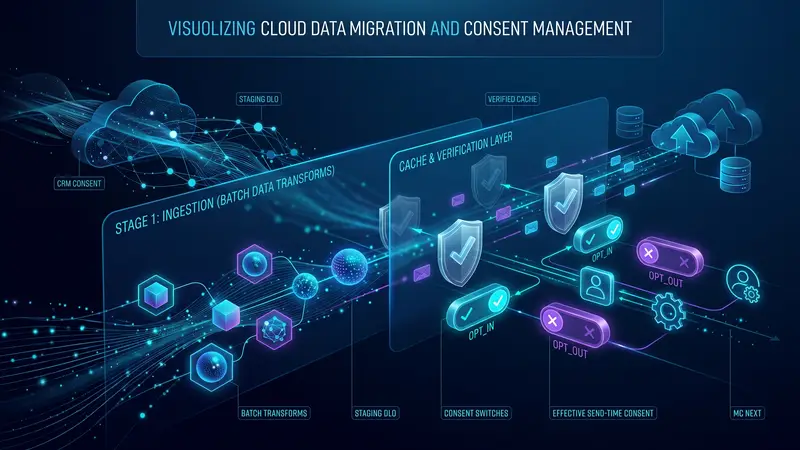
Migrating Consent from Salesforce CRM to Marketing Cloud Next: The Cache Trap
A practical migration pattern for moving existing Salesforce CRM consent into Data 360 and Marketing Cloud Next without creating a mismatch between the visible consent DMO and the state used at send time
Read About Migrating Consent from Salesforce CRM to Marketing Cloud Next: The Cache Trap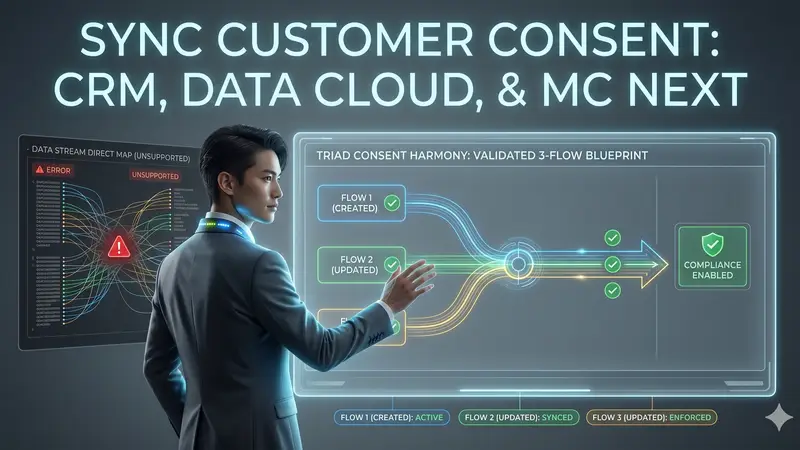
How to Keep Consent in Sync between Salesforce, Data 360 and Marketing Cloud Next
Blueprint for a validated, 3-flow system to achieve customer consent synchronization across Marketing Cloud Next, Data 360, and Salesforce CRM
Read About How to Keep Consent in Sync between Salesforce, Data 360 and Marketing Cloud Next